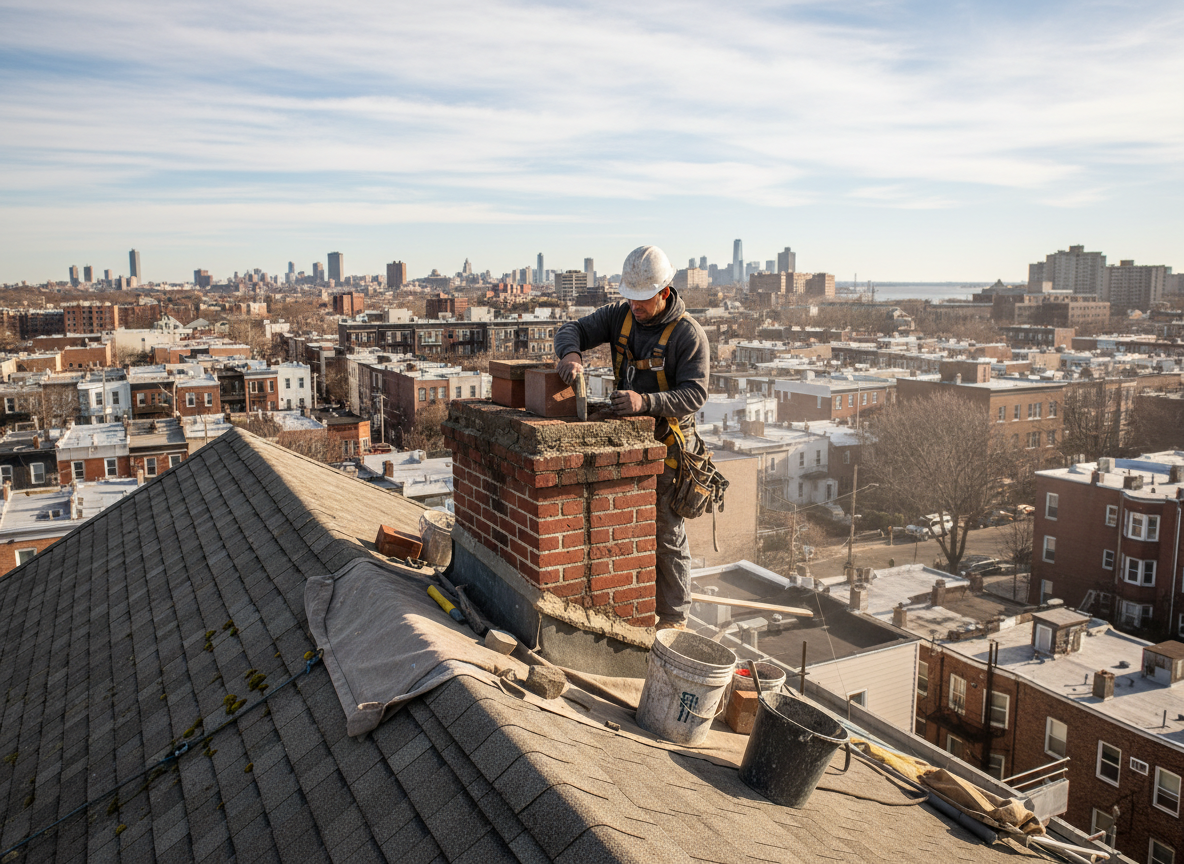
Roof chimney repair in West New York often centers on flashing and crown issues that develop after repeated freeze-thaw cycles in the local humid subtropical climate. Homes in The Heights and Downtown West New York typically feature older brick chimneys tied into slate or asphalt roofs, where expansion and contraction around the Hudson River Waterfront create hairline cracks that allow water intrusion during heavy summer storms and winter snow melt.
Technicians working these jobs routinely check the interface between the chimney and roof deck because nearby Union City and North Bergen properties share the same steep pitches and narrow lots that limit access. Proper repair involves removing failed mortar, installing new step flashing, and applying a breathable sealant rated for coastal humidity rather than generic caulk that fails within a season.
Homeowners in Hudson County frequently overlook how wind-driven rain off the river accelerates deterioration at the back side of the chimney. A thorough repair includes verifying the cricket or saddle is intact so water sheds correctly instead of pooling against the masonry during the cold winter months.
Technician insight
In West New York, the thing that catches most people out with roof chimney repair is how the combination of cold winters and constant humidity from the Hudson River causes mortar to spall on the north-facing side of chimneys in The Heights long before homeowners notice interior stains.
Water Intrusion on a Slate Roof
A Downtown West New York homeowner reported ceiling stains after winter storms. Inspection revealed cracked flashing where the chimney met the older slate roof. New step flashing and repointed joints were installed, restoring a watertight seal without altering the roof profile.
How it works
- 1
Site Assessment
Examine roof pitch, flashing condition, and masonry joints from both interior and exterior access points in West New York neighborhoods.
- 2
Damage Documentation
Photograph cracks, loose bricks, and water paths, then explain findings to the homeowner before any work begins.
- 3
Material Removal
Carefully cut out failed flashing and deteriorated mortar without disturbing sound brickwork on older Heights properties.
- 4
Repair Installation
Install new copper or stainless flashing, repoint joints with type N mortar, and seal the crown to match existing roof lines.
- 5
Final Verification
Run a water test and inspect attic spaces to confirm no active leaks remain before leaving the job site.
Pricing
Upfront quotes provided after on-site inspection of roof access and damage extent.