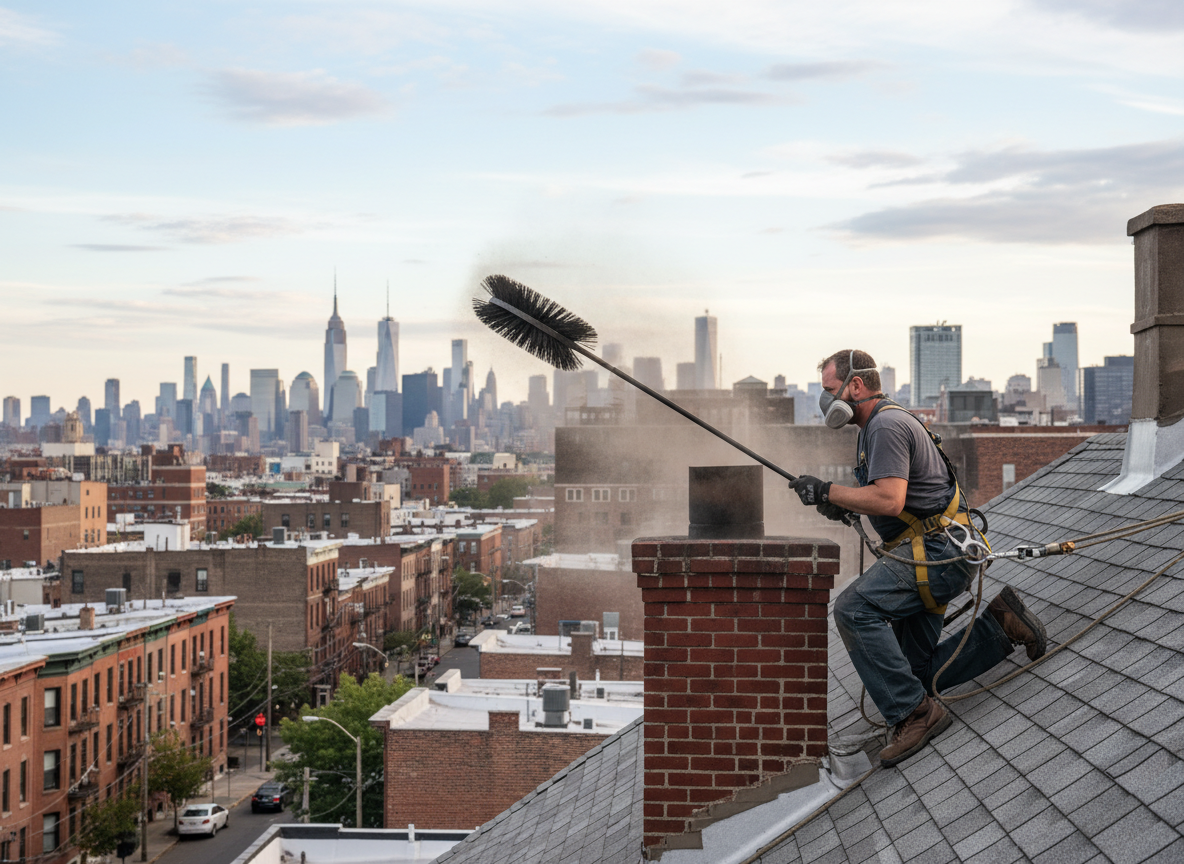
In Hudson County row homes and multi-family buildings common in Downtown West New York and The Heights, chimney maintenance focuses on removing creosote buildup that accelerates during cold winters when wood-burning fireplaces run daily. Hot humid summers add moisture that can corrode flue liners and masonry joints, especially in structures near North Hudson Park where wind exposure off the Hudson River increases draft problems. Regular cleaning and inspection prevent water intrusion that leads to interior staining on upper floors.
Older brick chimneys in neighborhoods bordering Union City and North Bergen often show shifted crowns or cracked flue tiles from freeze-thaw cycles. Maintenance includes checking mortar integrity and ensuring proper flashing at the roofline to block driving rain. Technicians also verify that chimney caps remain secure against the strong winds that sweep across the waterfront, reducing the chance of downdrafts pushing smoke back into living spaces.
Homeowners in West New York sometimes overlook the connection between neglected maintenance and carbon monoxide risks during prolonged cold snaps. A thorough service examines the smoke chamber and damper operation while clearing any debris that accumulates from nearby trees around North Hudson Park. Addressing these details early avoids larger structural repairs later when winter weather returns.
Local Weather Impact on Maintenance
Humid subtropical conditions mean summer humidity can leave residual moisture inside flues that then freezes and expands in winter, widening existing cracks in masonry. Scheduling maintenance before the first cold front arrives keeps systems clear for reliable operation through the season.
Technician insight
In West New York, the thing that catches most people out with chimney maintenance is how quickly moisture from humid summers gets trapped in the flue and then freezes solid during cold snaps, widening cracks in the older brickwork found throughout The Heights.
Heights Rowhome Flue Inspection
Homeowner noticed occasional smoke smell on windy days. Inspection revealed creosote buildup and a hairline crack in the flue liner from repeated freeze-thaw cycles. We cleaned the flue, sealed the crack, and confirmed proper draft before winter set in.
How it works
- 1
Initial Assessment
Inspect the chimney exterior and interior from the roofline down to the firebox, noting any signs of water staining or creosote in homes near the Hudson River Waterfront.
- 2
Cleaning and Removal
Remove creosote and debris using brushes sized for the flue, paying special attention to bends common in older Heights chimneys.
- 3
Component Check
Examine damper, flue liner, and crown for damage caused by freeze-thaw cycles typical after cold winters.
- 4
Final Verification
Test draft and confirm proper sealing at roof penetrations before leaving the property.
Pricing
Upfront quotes provided after on-site inspection for chimney maintenance work.