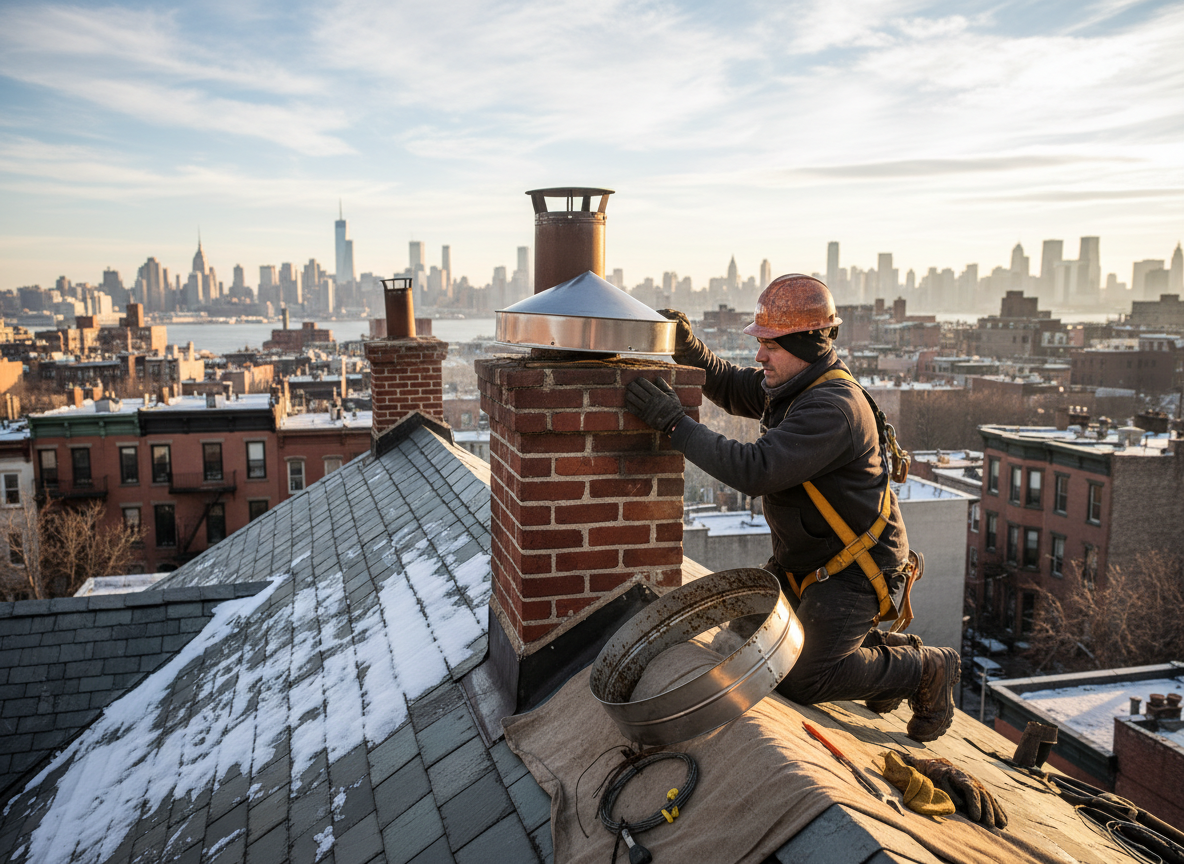
Chimney caps in West New York face constant stress from the humid subtropical climate, where cold winters bring freeze-thaw cycles that crack mortar and loosen flashing around the crown. Homes in The Heights and Downtown West New York often date to the early 1900s with masonry chimneys that settle unevenly on the sloped terrain near North Hudson Park. Salt-laden air drifting from the Hudson River Waterfront speeds rust on galvanized and stainless caps, especially on structures in Union City and North Bergen that share the same wind patterns.
A failing cap lets rainwater enter the flue, saturating flue tiles and promoting creosote buildup that becomes harder to manage during hot summer humidity. We inspect the cap, crown, and upper flue for separation at the joints where older brick has shifted. Replacement involves selecting caps rated for coastal exposure and securing them with stainless hardware that resists the constant moisture coming off the river.
Code compliance in Hudson County requires proper spark arrestors and clearance from nearby rooflines, which matters on the tight lots common along the waterfront. Skipping these details leads to repeated leaks or failed inspections when properties change hands. We match the cap style to the existing chimney to avoid drawing attention from neighbors or historic review boards in the area.
Seasonal Considerations
Winter freeze-thaw cycles in Hudson County expand small gaps around caps into active leaks by spring. Summer humidity slows drying inside flues, so a repaired cap must vent properly to prevent moisture retention through the shoulder seasons.
Technician insight
In West New York, the thing that catches most people out with chimney cap repair is how quickly salt air from the Hudson River corrodes standard galvanized caps on The Heights row homes; the older brick shifts every winter and the new cap has to flex with it or the flashing fails within two seasons.
Leaking Cap on Riverfront Row Home
A homeowner in Downtown West New York noticed water stains on the third-floor ceiling after a cold snap. We found the original galvanized cap rusted through at the seams and the crown mortar eroded from repeated freeze-thaw cycles. We replaced it with a stainless cap and resealed the crown joints, stopping the leak before spring rains arrived.
How it works
- 1
Site Inspection
Examine the cap, crown, and upper flue for rust, cracks, and separation while noting exposure to river wind on the specific block in West New York.
- 2
Material Selection
Choose stainless or copper cap sized to the flue and rated for salt air, confirming spark arrestor meets county requirements.
- 3
Removal and Prep
Take off the old cap, clean debris, and repair any crown damage before installing new flashing to seal against freeze-thaw movement.
- 4
Installation and Test
Secure the new cap with stainless fasteners, verify draft, and confirm no water entry points remain around the crown.
Pricing
Upfront quotes after on-site inspection account for cap material, flue size, and roof access in older Hudson County homes.