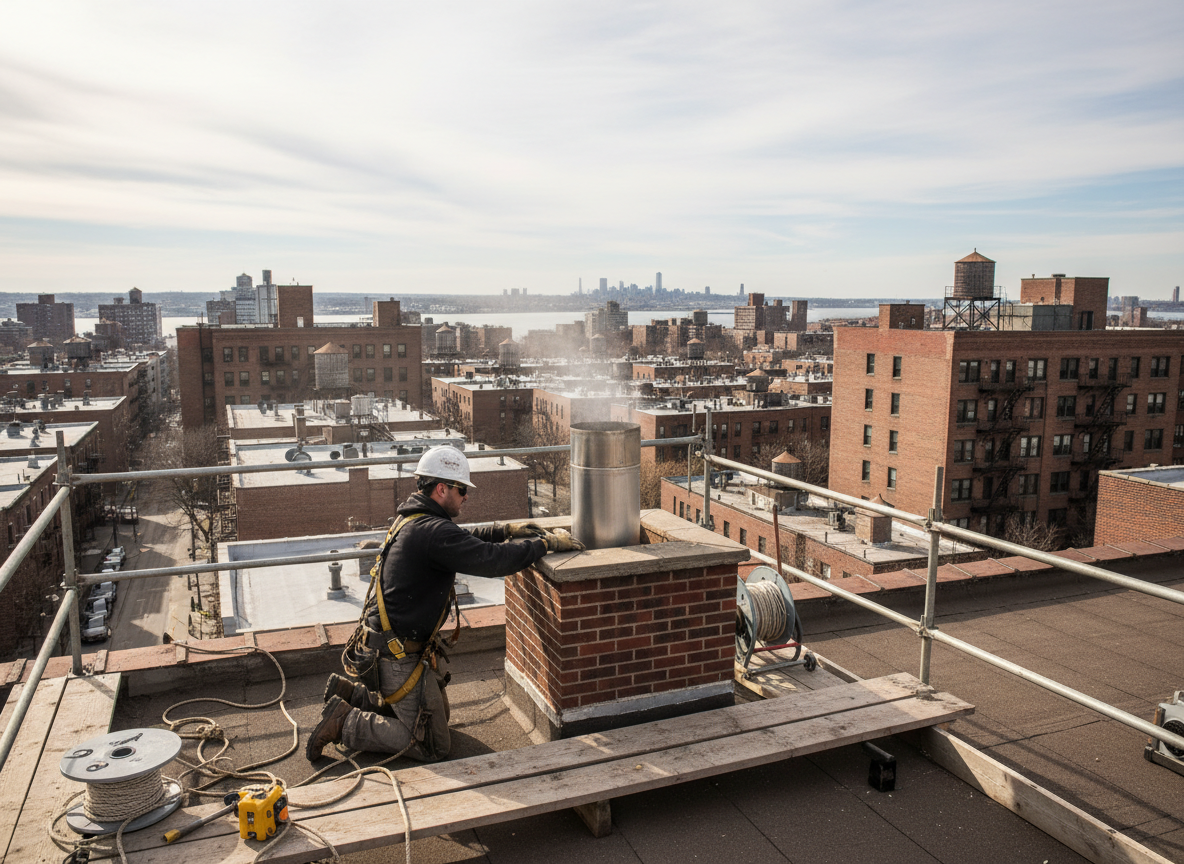
West New York homes built before the 1960s in The Heights and Downtown often have unlined or deteriorated clay tile flues that crack from freeze-thaw cycles in the humid subtropical winters. Relining with stainless steel or cast-in-place liners restores draft and contains combustion gases before they leak into living spaces near North Hudson Park. The work requires dropping a liner through the flue while accounting for the tight roof access common on row houses along the Hudson River Waterfront.
Summer humidity accelerates creosote buildup that then hardens during cold snaps, narrowing the flue and raising carbon monoxide risk in Hudson County homes. Relining crews must first camera-inspect for offsets caused by settling soil along the riverfront before selecting the correct diameter and insulation wrap. Union City and North Bergen properties with shared chimneys between attached homes add extra steps to seal joints without disturbing neighboring stacks.
Code compliance in West New York requires liners to meet NFPA 211 standards, especially when converting from oil to gas appliances common in renovated Heights buildings. Technicians verify proper termination height above the roofline to clear waterfront wind patterns that can push downdrafts back into the chimney. Skipping insulation around the new liner in these older homes leads to rapid heat loss and condensation that re-damages the masonry within a few seasons.
Technician insight
In West New York, the thing that catches most people out with chimney relining is the hidden offsets in pre-war chimneys along the Hudson River Waterfront. Cold winters freeze moisture that seeps into The Heights masonry, shifting the flue just enough that a standard liner binds halfway down. We always scope from the roof first because ground-level inspections miss the river-driven settling that changes the entire job.
The Heights row house flue offset
A 1920s brick chimney in The Heights showed poor draft after switching to a gas insert. Camera revealed a two-inch offset from soil movement near the river. We cleaned the flue, installed a flexible stainless liner with insulation, and sealed both ends. The homeowner regained reliable draft through the first winter without further masonry damage.
How it works
- 1
Initial Camera Inspection
Technicians scope the flue from the top and bottom to map cracks, offsets, and creosote depth in West New York chimneys.
- 2
Flue Cleaning and Prep
Remove debris and loose material so the new liner seats fully without obstructions from years of river-area humidity.
- 3
Liner Installation
Insert stainless or cast-in-place liner sized for the appliance and local wind loads along the Hudson River Waterfront.
- 4
Sealing and Testing
Seal connections, insulate where needed, and perform a draft test to confirm proper exhaust in cold winter conditions.
Pricing
Cost depends on chimney height, liner material, and access difficulty in multi-story Heights homes; call 24/7 for an upfront quote.