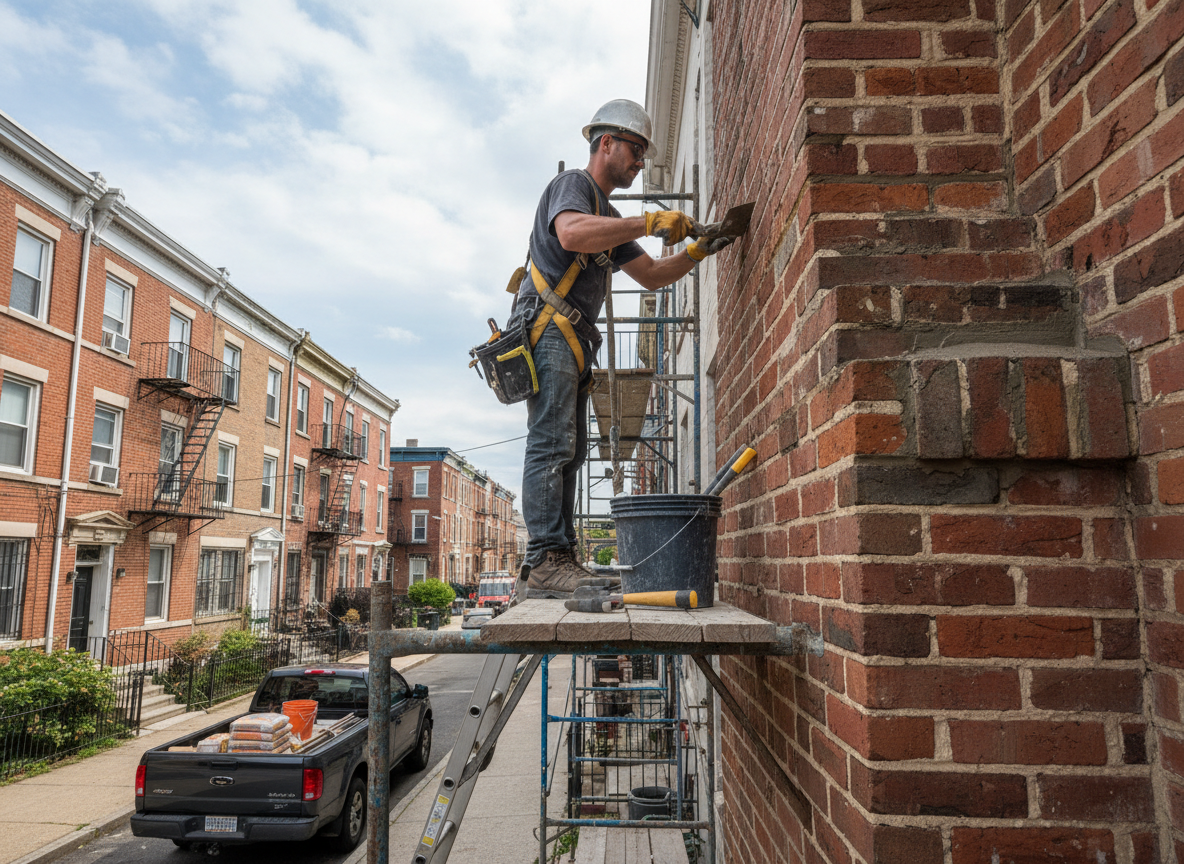
West New York sits in a humid subtropical climate where hot summers give way to freezing winters that drive repeated freeze-thaw cycles through chimney masonry. Homes in The Heights and Downtown West New York are mostly early- and mid-20th-century brick row houses whose chimneys were built with soft mortar and single-wall flues. These stacks sit exposed on the Hudson River side, so wind-driven rain and salt air accelerate spalling and crown cracking that homeowners in Union City or North Bergen notice first as water stains on top-floor ceilings.
When a flue liner cracks, combustion gases can migrate into living spaces, especially during the long heating season when furnaces run daily. Code requires proper relining or rebuilding to maintain clearance and draft, and work in these tight lots often means scaffolding along shared walls rather than simple ground access. We inspect the crown, flashing, and smoke chamber from the roof down, then match repair methods to the actual brick and mortar age instead of assuming modern standards apply.
Routine maintenance catches small issues before they force full rebuilds. In waterfront blocks, we see water pooling at the base of chimneys because the grade slopes toward the building; correcting that drainage prevents the next winter's damage. Every job starts with a hands-on look at the specific stack rather than a checklist, because no two row houses in the same block share identical exposure or prior repairs.
Seasonal Guidance
Cold snaps in January and February turn hairline cracks into active leaks as ice expands inside the flue. Schedule inspections in late fall before the first hard freeze, especially for chimneys serving oil or wood-burning appliances that produce more acidic condensation.
Technician insight
In West New York, the thing that catches most people out with Residential chimney repair is how quickly freeze-thaw cycles near the Hudson River Waterfront open up mortar joints in The Heights row houses; the same stack that looked fine in October can leak badly by February because the soft historic mortar was never meant for our winters.
Leaking Chimney on a Heights Row House
Water stains appeared on the top-floor ceiling of a brick home in Downtown West New York after a January cold snap. We found failed crown mortar and a cracked flue liner allowing meltwater to track down the shared wall. We rebuilt the crown, installed a stainless liner, and corrected the roof flashing tie-in so runoff no longer pooled at the base.
How it works
- 1
Site Inspection
We climb the roof and examine the crown, flashing, and liner condition from both top and bottom on homes in The Heights or Downtown West New York.
- 2
Damage Assessment
We map cracks, spalling, and water intrusion points, noting how Hudson River moisture and winter freeze cycles have affected the specific masonry.
- 3
Targeted Repair
We repoint mortar, rebuild the crown, or install a new liner using materials matched to the original brick age and exposure.
- 4
Final Testing
We verify draft and seal integrity with a smoke test before leaving the property.
Pricing
Upfront quotes provided after on-site inspection; final price depends on extent of masonry damage and liner work required.