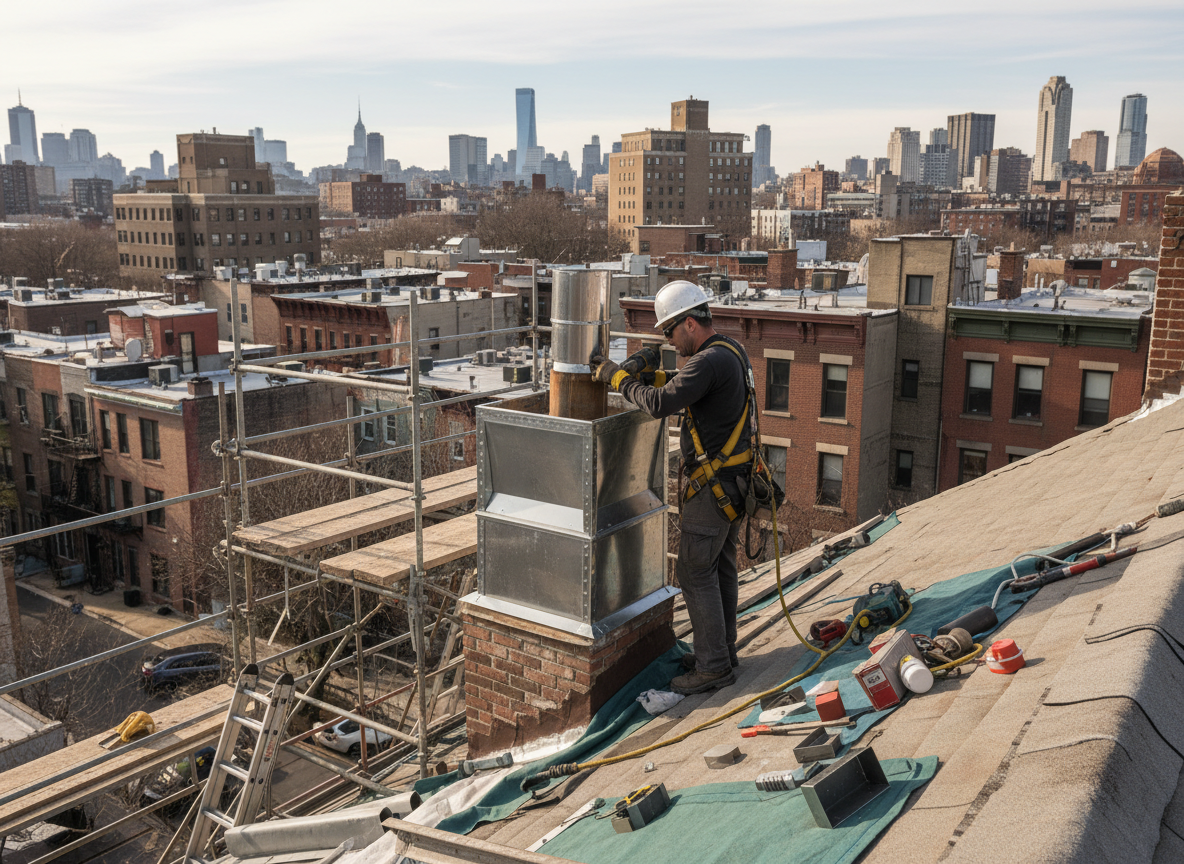
Prefabricated chimneys in West New York row homes and multi-family buildings along the Hudson River Waterfront face accelerated corrosion from the area's humid subtropical climate. Cold winters bring repeated freeze-thaw cycles that crack factory joints and degrade metal liners, especially in structures built before modern venting standards. Homes in The Heights and Downtown West New York often share flues or sit close to neighboring buildings, creating draft and clearance issues that require precise component matching rather than generic fixes.
Repair work here frequently involves replacing warped flue sections or failed rain caps that allow water intrusion during heavy summer storms followed by sudden cold snaps. Technicians must account for the tight access in older Hudson County housing stock where chimneys run through finished attics or between party walls. Using original manufacturer parts prevents voiding listings and maintains proper clearances required by local codes near North Hudson Park and Union City borders.
In North Bergen and adjacent neighborhoods, soil settlement from the riverfront terrain can shift chimney bases over decades, misaligning prefabricated sections. This demands inspection of both the chase and the roof penetration before any component swap. Homeowners in West New York often overlook how nearby high-rises alter wind patterns, increasing downdraft problems that only surface after a liner replacement.
Common Prefabricated Chimney Issues in Hudson County
River humidity combined with winter temperature swings causes gasket failure and rust at seams within five to seven heating seasons. Checking for creosote buildup behind the metal shell prevents hidden fire hazards in The Heights homes where annual inspections are less common than in newer suburban builds.
Technician insight
In West New York, the thing that catches most people out with prefabricated chimney repair is how the Hudson River humidity gets behind the outer shell in The Heights row homes and rots the hidden supports long before the cap shows rust. Cold winters then freeze that moisture and pop the joints apart.
Downtown West New York Prefab Liner Shift
A homeowner noticed smoke backing into the living room after the first cold snap. Inspection revealed the prefabricated chimney base had settled due to riverfront soil movement, separating two flue sections. We realigned the chase, replaced the damaged mid sections with matching parts, and resealed the roof penetration. The system now drafts cleanly with no further smoke issues.
How it works
- 1
Initial Inspection
Assess the prefabricated chimney from roof to firebox, checking for corrosion, joint separation, and draft issues common in West New York riverfront homes.
- 2
Component Diagnosis
Identify failed sections such as flue pipes, caps, or seals damaged by Hudson County freeze-thaw cycles and humidity.
- 3
Targeted Repair
Replace only the damaged prefabricated parts using manufacturer-matched components to restore proper venting and clearances.
- 4
Final Testing
Verify draft, seal integrity, and code compliance before returning the system to service.
Pricing
Pricing depends on chimney height, number of sections requiring replacement, and access constraints typical in older West New York buildings.