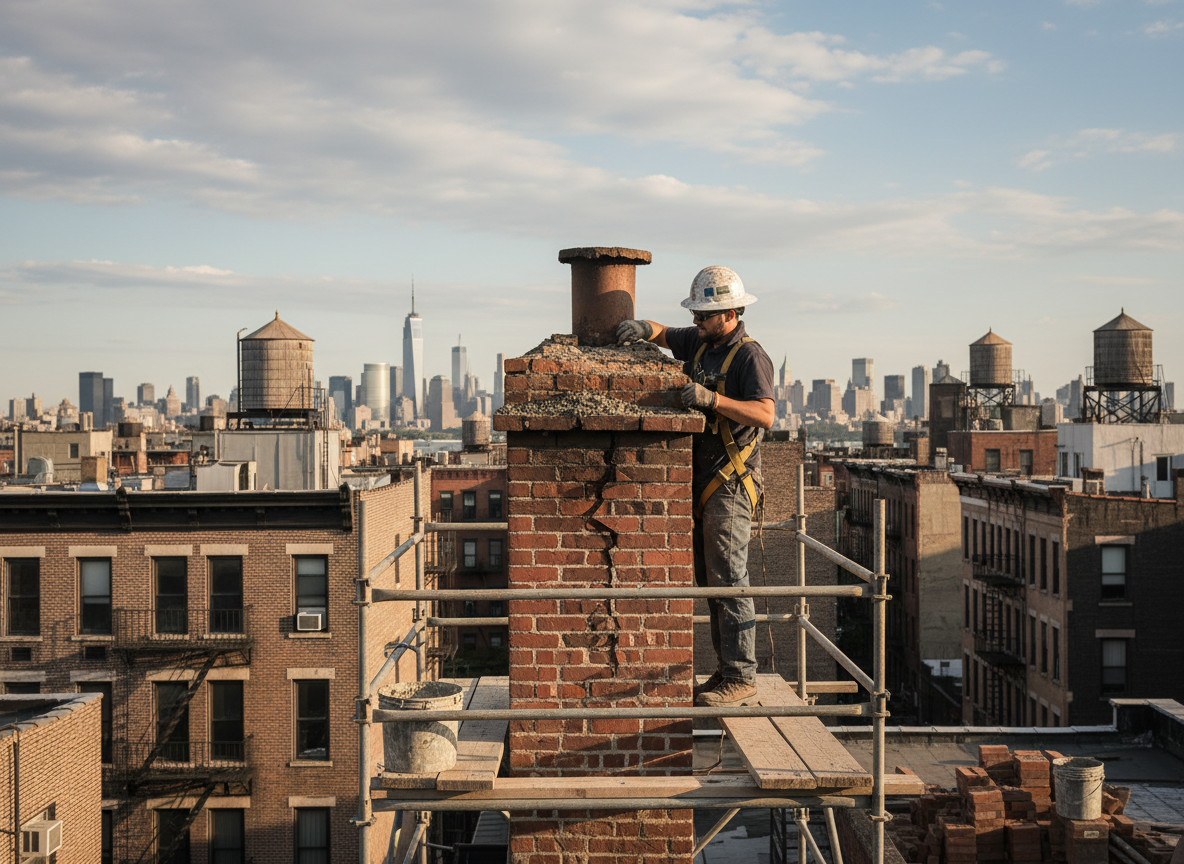
West New York sits in Hudson County with many older masonry chimneys in The Heights and Downtown that face constant exposure to Hudson River wind and moisture. Cold winter nights drive freeze-thaw cycles that crack flue tiles and mortar joints, while summer humidity keeps creosote moist and more likely to cause sudden blockages or odor issues. When a storm knocks down a cap or heavy rain pours down an uncapped flue, homeowners in Union City and North Bergen often call because smoke backs up into living spaces within minutes.
Emergency work here usually starts with a full flue camera scan to locate loose bricks or separated liners that standard visual checks miss. We carry spare clay and stainless liners sized for the narrow chimneys common in pre-war row homes along the riverfront. Code requires proper termination height above the roofline, and river gusts make even small height shortfalls create dangerous downdrafts during the next cold front.
After sealing the firebox and installing a temporary weather cover, we schedule the permanent fix once daylight allows safe roof access. Homes near North Hudson Park sit on steeper slopes where ladder setup takes extra time and requires street permits in some blocks. Skipping these steps risks incomplete draft restoration and repeat service calls when the next nor’easter hits.
Technician insight
In West New York the thing that catches most people out with emergency chimney repair is the river wind hitting older brick stacks in The Heights. A cap that looks fine from the street can be cracked on the north face, and one good nor’easter turns a small leak into a full flue blockage overnight.
Storm-Damaged Flue in The Heights
Heavy rain and wind from the Hudson River Waterfront pushed water past a cracked clay liner in a 1920s row home. Camera showed separation three feet below the roofline that allowed smoke to enter the second-floor bedroom. We installed a stainless liner section and temporary cap the same night, then returned two days later to finish pointing and install a proper chase cover.
How it works
- 1
Initial Call and Dispatch
We answer 24/7, confirm the address in West New York or nearby Union City, and send the closest truck with camera and basic liner stock.
- 2
On-Site Safety Check
Technician inspects for carbon monoxide risk, shuts down the appliance if needed, and documents visible damage from the roof to the cleanout.
- 3
Camera Diagnosis
We run a flue camera to locate cracks, blockages, or liner separation common after freeze-thaw cycles in Hudson County winters.
- 4
Temporary Containment
We install a weather-tight cover and advise on safe appliance use until permanent repairs can be completed.
- 5
Follow-Up Repair Plan
Customer receives a written scope with photos and we book the full repair during daylight hours when roof access is safest.
Pricing
Emergency after-hours work carries a response premium; final cost depends on chimney height, liner length needed, and roof access difficulty in sloped blocks near the river.