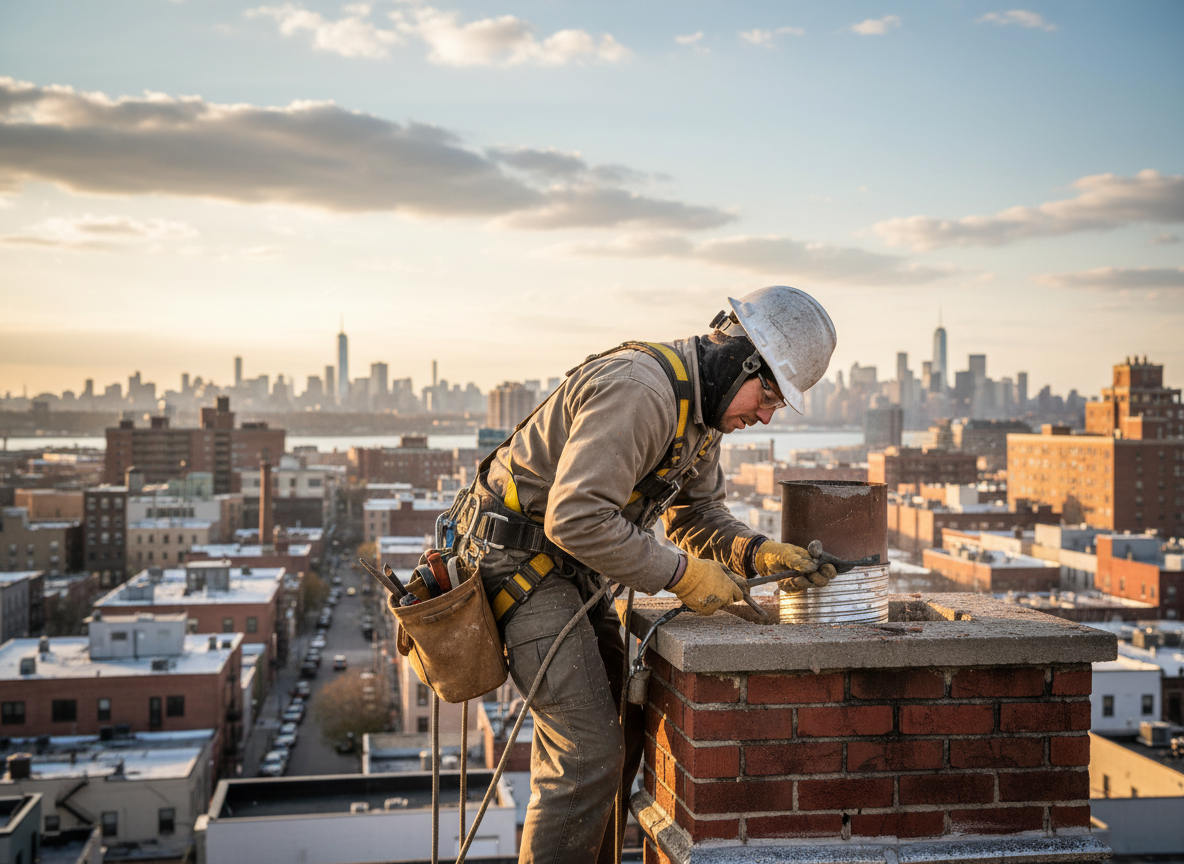
Chimney liners in West New York homes built before the 1970s often suffer from cracking due to repeated freeze-thaw cycles in the humid subtropical climate. Cold winters send temperatures below freezing while summer humidity promotes condensation inside flues, especially in The Heights where many two-story brick houses sit on sloped terrain that funnels rainwater toward foundations. Liner materials like clay tile or stainless steel react differently to this moisture; clay cracks first and allows creosote buildup that can ignite. Technicians must check for proper clearances to combustible framing common in these older structures before any repair.
Access challenges appear frequently near the Hudson River Waterfront where narrow lots in Downtown West New York limit equipment placement. Liners running through shared walls with neighboring properties in Union City require careful coordination to avoid disturbing adjacent flues. High winds off the river can also push water past crown seals, accelerating corrosion at the liner joints. Experienced crews carry flexible stainless inserts sized for the specific flue diameters found in Hudson County row homes rather than assuming standard measurements.
Code compliance in New Jersey demands that any liner replacement maintains the original chimney's draft capacity while meeting current UL listings for the fuel type used. Homes in North Bergen often have coal-era chimneys converted to gas, leaving incompatible liner diameters that force custom fabrication. Skipping proper insulation around the new liner allows heat transfer that can damage nearby wood framing during cold snaps.
Winter Moisture Risks
Freeze-thaw cycles combined with river humidity cause most liner failures in The Heights; inspect before the first hard freeze to prevent water infiltration through hairline cracks.
Technician insight
In West New York, the thing that catches most people out with chimney liner repair is how the cold winters and constant river moisture in The Heights accelerate corrosion on older clay liners that were never meant for today's gas appliances.
Liner Crack in Downtown West New York
Problem: Homeowner noticed water stains on the second-floor ceiling after a cold snap. What we found: A cracked clay liner in a pre-1960 chimney allowing condensation from river humidity to seep into the flue. What we did: Installed a stainless steel liner with insulation while preserving the original brick structure. Outcome: Draft restored and no further moisture issues through the next winter.
How it works
- 1
Initial Assessment
Examine the existing liner through the cleanout and roof termination to identify cracks, gaps, or corrosion caused by local weather exposure.
- 2
Material Selection
Choose stainless steel or cast-in-place options matched to the chimney's height and fuel type common in West New York row homes.
- 3
Liner Installation
Remove damaged sections and install the new liner with proper insulation while protecting surrounding masonry from Hudson County winter moisture.
- 4
Final Testing
Perform draft and smoke tests to confirm proper function before restoring the chimney cap and flashing.
Pricing
Pricing varies with liner material choice and access difficulty in older Hudson County chimneys.