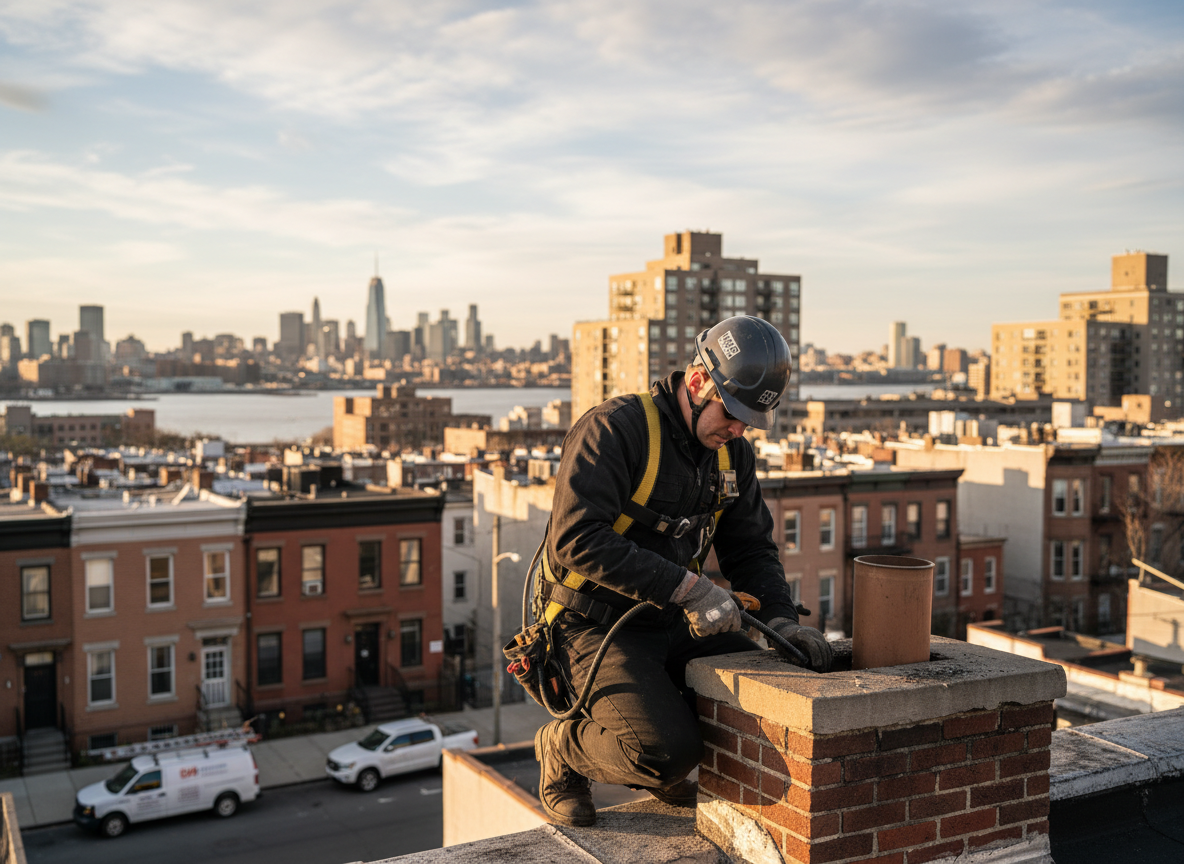
West New York sits in a humid subtropical climate where hot summers give way to freezing winters that drive repeated freeze-thaw cycles through brick and mortar. Many homes in The Heights and Downtown date back to the early 1900s with common brick chimneys tied into row-house construction. These stacks often show deteriorated flue tiles and hairline cracks that allow water to reach interior framing. An inspection must include a level-two camera sweep from the cleanout to the crown plus a check of the flashing where the chimney meets the roofline along the Hudson River waterfront.
Union City and North Bergen share the same ridge topography, so wind-driven rain hits west-facing chimneys hardest. Owners frequently overlook the crown and wash that sit above the roofline until water stains appear on second-floor ceilings. We also examine the damper assembly and smoke chamber for creosote buildup that accelerates during the short heating season. Any noted separation at the crown or missing mortar in the upper courses triggers a recommendation for tuckpointing before the next cold snap.
Code compliance in Hudson County requires that every fireplace and wood stove be inspected when a property changes hands or after any roof work. We document spark arrestor condition, liner integrity, and clearance to combustibles inside the attic. Homes near North Hudson Park often have mature trees that drop debris directly into the flue, so we always clear the top before the camera run. This prevents false readings and reveals hidden obstructions that would otherwise surface only during the first winter fire.
Seasonal Guidance
Cold snaps in January and February turn small cracks into active leaks once snow melts. Schedule inspections in late fall so any tuckpointing or crown repairs can be completed before temperatures drop below freezing.
Technician insight
In West New York the thing that catches most people out with chimney inspection service is the hidden separation between the crown and the flue tiles on pre-1940 brick stacks in The Heights. Freeze-thaw cycles along the waterfront loosen the top course first, and water tracks straight down the back wall of the house before anyone sees stains inside. Checking that joint from the roof during every inspection prevents the surprise leaks that show up after the first hard freeze.
The Heights Row Home Flue Blockage
A homeowner in The Heights called after noticing slow draft on cold mornings. We found the flue partially blocked by fallen masonry from the crown and heavy creosote below the offset. The camera revealed two cracked flue tiles allowing water into the attic space. We cleared the debris, documented the liner damage, and provided a repair plan before the next freeze.
How it works
- 1
Schedule and Access
We confirm 24/7 appointment availability and meet at the property in West New York or adjacent Union City to gain safe roof access.
- 2
Exterior Visual Check
We examine the crown, flashing, and brickwork from the ground and roof, noting any separation common in The Heights row homes.
- 3
Interior Camera Sweep
A level-two video inspection runs from the firebox through the flue to document tile condition and creosote deposits.
- 4
Report and Recommendations
Findings are delivered same day with photos and prioritized repair options based on the home's age and exposure to Hudson River winds.
Pricing
Upfront quotes provided after the inspection; final cost depends on chimney height, access, and any additional camera time required.