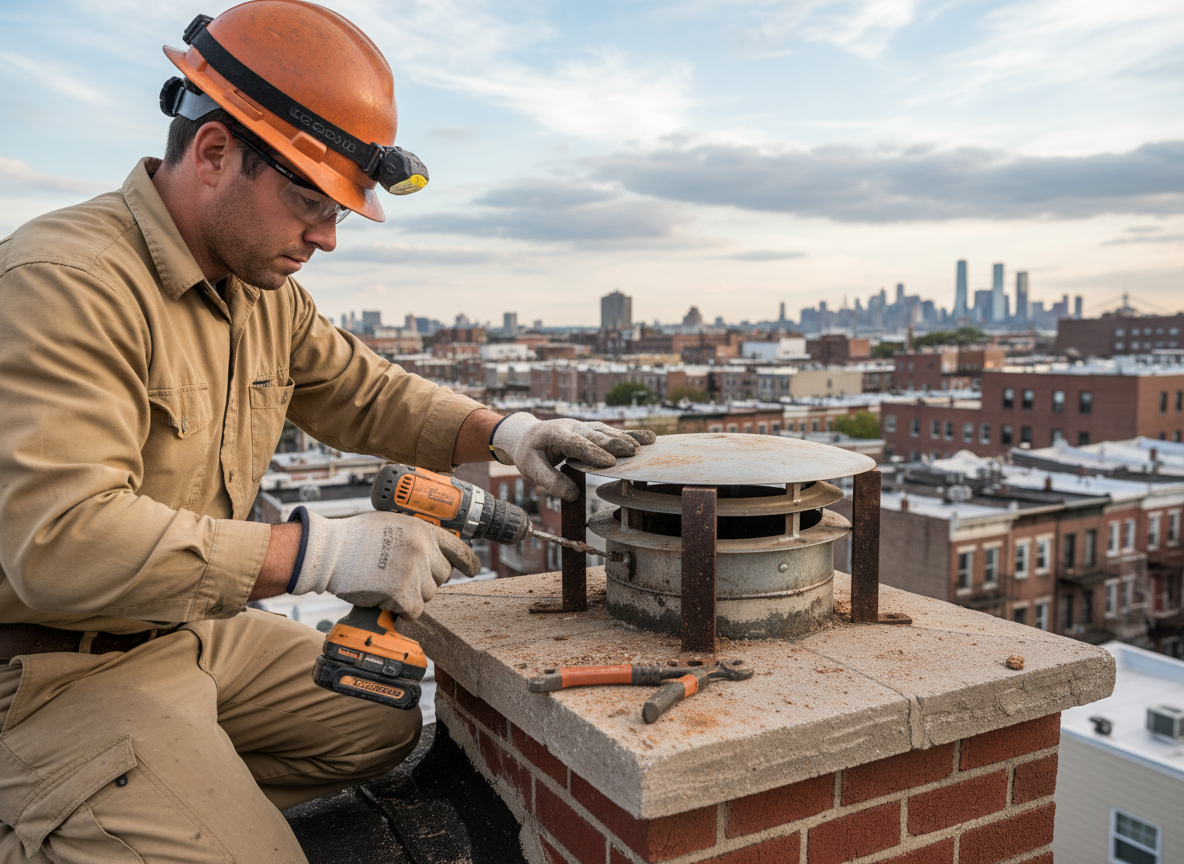
Chimney dampers in West New York homes built before the 1970s often sit inside masonry stacks that run through unheated attics and sit exposed to the Hudson River waterfront. Cold winter air sinks down the flue when the damper fails to seal, while summer humidity accelerates rust on the metal plate and pivot rod. Technicians working from 55-1 Riverwalk Pl routinely find warped cast-iron dampers in The Heights row houses where original hardware has never been replaced and the flue has collected years of creosote and salt air.
Repair begins with a top-down inspection that checks the throat, lintel, and smoke chamber for cracks caused by freeze-thaw cycles common in Hudson County. In many Downtown West New York buildings the damper is accessed only after removing a rusted chain or cable that runs through the masonry. Replacement units must match the original flue dimensions exactly; oversized plates bind in summer heat expansion while undersized ones allow downdrafts from the river.
Homeowners in Union City and North Bergen often notice smoke spillage on windy days before they realize the damper is the source. A seized damper also forces more creosote buildup because the fire cannot draft properly once the plate no longer opens fully. Local crews carry both stainless retrofit plates and traditional cast-iron units sized for the narrow flues typical of pre-war construction along the waterfront.
Seasonal Considerations
Cold snaps in January and February are the busiest period for damper calls in The Heights because overnight temperatures drop fast near North Hudson Park. Homeowners who leave the damper open all summer return to find the plate frozen in place from condensation. Scheduling an inspection before the first freeze prevents emergency service when the house fills with smoke during the first cold night.
Technician insight
In West New York, the thing that catches most people out with chimney damper repair is how quickly river humidity and winter freeze-thaw cycles seize the pivot rod in the narrow flues of pre-war brick homes in The Heights. Homeowners assume the damper still works until smoke backs up on the first cold night.
Seized Damper in Downtown West New York Row House
Homeowner reported smoke entering the living room during the first January cold snap. Inspection from the roof revealed a rusted cast-iron damper frozen halfway open after years of exposure to Hudson River moisture. Crew removed the seized plate, installed a properly sized stainless retrofit unit, and confirmed full closure before leaving.
How it works
- 1
Site Assessment
Technician climbs to the roof from the 55-1 Riverwalk Pl base and inspects the damper plate, pivot, and flue walls for corrosion and masonry damage common in river-adjacent homes.
- 2
Access and Cleaning
Remove creosote and debris that lock the damper in older Hudson County chimneys, then test the existing mechanism for binding caused by years of humidity cycles.
- 3
Repair or Retrofit
Replace the damper plate or install a stainless retrofit unit sized to the exact flue dimensions found in Downtown West New York and The Heights homes.
- 4
Final Test and Seal
Operate the new damper through full range, confirm airtight closure, and seal any gaps around the frame to stop winter downdrafts from the Hudson River.
Pricing
Upfront quotes provided after inspection; final price depends on access difficulty and whether a full retrofit plate is required.