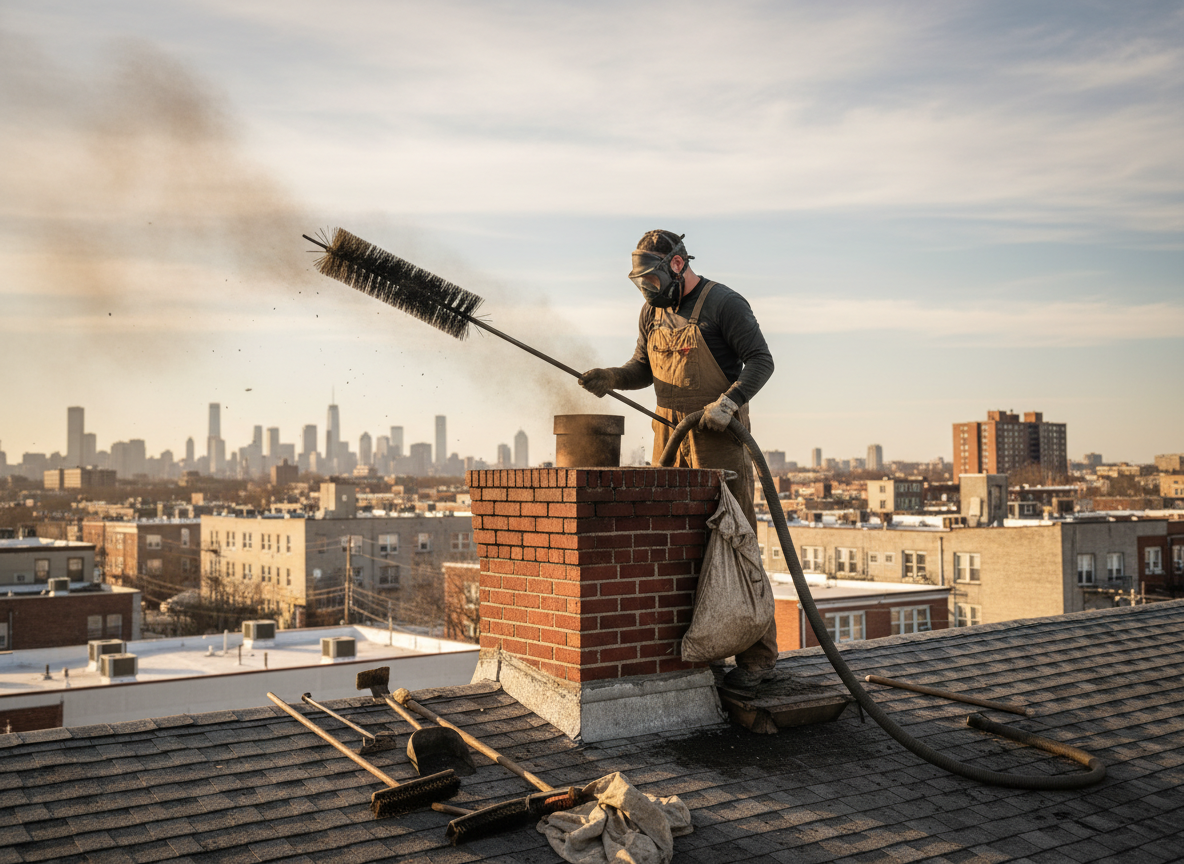
West New York sits in Hudson County along the Hudson River Waterfront where cold winters drive regular wood burning and rapid creosote formation inside flues. The humid subtropical climate adds moisture that can turn dry creosote into a sticky, hard-to-remove layer on masonry walls. Homes in Downtown West New York and The Heights often date to the early twentieth century with narrow flues and multiple bends that trap debris more readily than newer construction in North Bergen. A standard annual cleaning must reach every angle without damaging the original brick or clay liner.
Technicians start by confirming the chimney is structurally sound before any brushing begins, because waterfront exposure can loosen mortar joints over decades. In The Heights the slight elevation creates stronger updrafts that pull more soot downward during cleaning, requiring extra containment around nearby rooftops. Union City row houses frequently share chimney stacks, so crews must isolate each flue to avoid cross-contamination. Skipping these steps leaves hidden pockets that later cause smoke spillage or chimney fires when temperatures drop again.
After brushing, a camera inspection verifies the flue is clear and notes any cracks that winter freeze-thaw cycles may have widened. Homeowners in the area are advised to schedule before the first hard freeze so the chimney can dry fully before heavy use. The 24/7 schedule at 55-1 Riverwalk Pl allows same-day response when a blocked flue is discovered mid-winter.
Local Housing Stock Considerations
Older brick chimneys in West New York and Union City often have parged interiors that can flake during aggressive brushing. Crews use softer nylon brushes on these surfaces and finish with a HEPA vacuum to capture fine particles before they settle into nearby North Hudson Park green space.
Technician insight
In West New York the thing that catches most people out with chimney cleaning service is how quickly riverfront humidity turns light creosote into a tar-like coating inside The Heights chimneys; one missed annual cleaning after a cold winter can force a full reline instead of a simple brush-out.
Blocked Flue in a Downtown Row House
A homeowner in Downtown West New York reported smoke backing into the living room after the first cold snap. Inspection showed third-stage creosote nearly closing the flue in an original brick chimney shared with the neighboring unit. The crew brushed and vacuumed the full length, confirmed clearance with the camera, and advised sealing the shared stack joint before the next freeze.
How it works
- 1
Initial Safety Check
Confirm structural integrity and clear the work area around the chimney top and base.
- 2
Creosote Removal
Use rotary brushes sized for the specific flue diameter to scrape buildup without damaging liners.
- 3
Debris Extraction
Vacuum all loosened material from the firebox and smoke chamber.
- 4
Camera Verification
Run a video inspection to confirm the flue is clear and document any needed repairs.
- 5
Final Cleanup
Seal the work area and advise on next burn season timing.
Pricing
Pricing varies by chimney height, number of flues, and creosote thickness; call for an upfront quote before work begins.