2026-10-24 ·
What Local Wind Patterns Mean For Chimney Draft In West New York
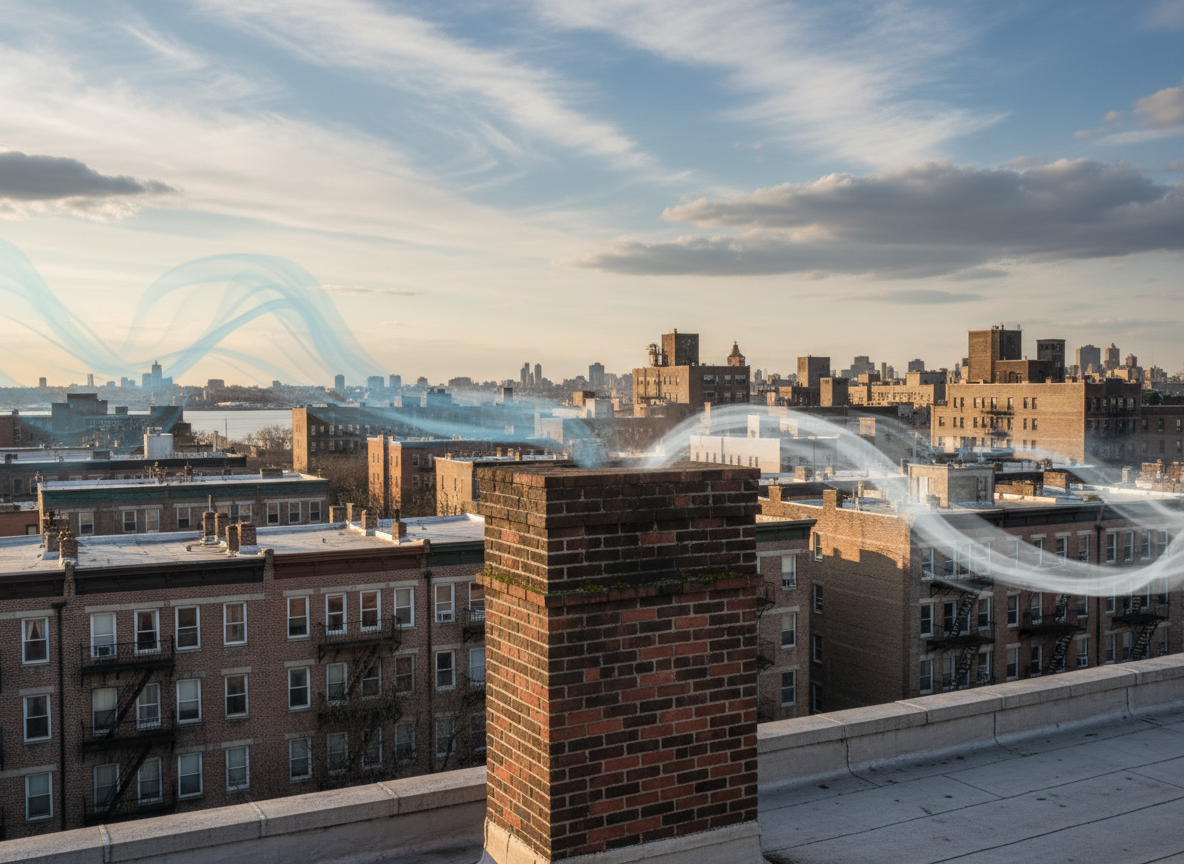
West New York sits directly on the Hudson River Waterfront, where prevailing northwest winds frequently push cold air down chimneys and disrupt upward draft in homes throughout Downtown West New York and The Heights. These river-driven gusts become strongest when winter temperatures fall and the air column inside the flue cools faster than the outdoor air, reversing normal flow and sending smoke back into living spaces.
How Hudson River Winds Create Downdrafts
The Hudson River acts as a wind corridor that funnels gusts across West New York, Union City, and North Bergen. When these winds hit chimneys at roof level they create negative pressure zones that overpower the natural thermal lift inside the flue. In humid subtropical winters, rapid temperature swings between daytime highs and nighttime lows make the effect worse because the flue cools quickly once the fire dies down. Homeowners in The Heights notice smoke spillage most often on blustery days when wind speeds exceed typical river breezes. Proper cap design and flue sizing become critical here because standard caps that work inland often fail against the steady river flow. Chimney cap repair addresses the most common point of failure when wind-driven rain and pressure combine.
Effects on Brick Chimneys in The Heights and Downtown
Many homes in The Heights and Downtown West New York still rely on original brick chimneys built before modern wind-load standards. These tall, narrow stacks catch crosswinds more readily than shorter metal flues, allowing downdrafts to travel the full height of the chimney. Cold winter air from the river infiltrates mortar joints and accelerates cooling inside the flue, further weakening draft. Over time this repeated pressure cycling loosens bricks and opens gaps that let additional air leak inward. Chimney relining restores a smooth, properly sized interior surface that resists these pressure changes and improves draft even when winds blow hard off the water.
Winter Conditions and Draft Problems in Hudson County
Hudson County winters bring the strongest wind events because cold dense air from the northwest rides the river surface and slams into waterfront neighborhoods. When outdoor temperatures stay below freezing for several days, the temperature difference between the flue and outside air shrinks, reducing natural draft to the point where even a small wind gust can stall combustion. Residents near North Hudson Park report the issue more frequently than those farther inland because the open parkland offers less shelter from river winds. Regular inspection catches early signs such as soot stains around the damper or difficulty starting fires on windy mornings. Winter chimney maintenance tips for West New York homes outlines the checks that keep draft reliable through the coldest months.
When to Address Draft Issues Before They Worsen
Persistent smoke in the room or a fireplace that will not stay lit on windy days signals that local wind patterns have overcome the chimney's natural draft. In older brick chimneys common to The Heights, these symptoms often appear together with creosote buildup because slow draft allows unburned particles to condense on cooler flue walls. Addressing the draft problem early prevents both safety hazards and accelerated wear on masonry. Creosote buildup signs in older West New York brick chimneys helps homeowners recognize when wind-related draft loss is compounding other issues. Homeowners in West New York can reach Haven Restore at 55-1 Riverwalk Pl any time for assessment when river winds begin to affect performance.